Commissions
唯一無二 — one of a kind. Made exclusively for you.
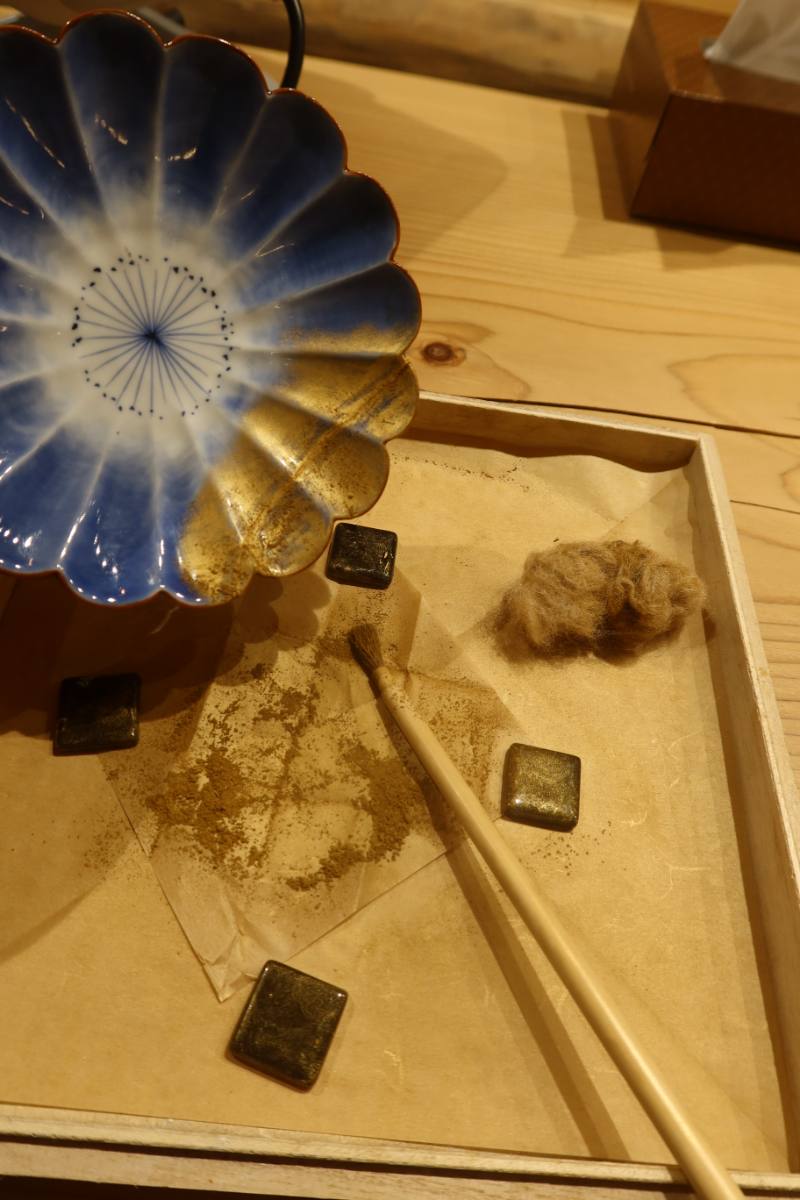
One of a kind
唯一無二 — only one, no two. In Japanese the phrase is kept for what cannot be replaced — not what is merely rare, but what has no equal. A commission is exactly that — a piece that did not exist before you asked for it, and will not be made again.
Guests often leave a workshop wishing they could take more than a memory — a bowl in a particular glaze, a jacket cut from a specific bolt of vintage cloth, a knife with their family name on the tang.
Some of the finest artisans say plainly that they do not take commissions. Often what that means is that they do not take them from strangers, in English, by email. Approached properly — in Japanese, through the right introduction, with a brief that respects how they work — many will at least consider it. Knowing which door to knock on, and how, is most of this.
Having been in the room with you, I can carry that conversation forward: what you want, what is actually possible, what it should cost, and how long it will take. Then I stay with it until the piece is in your hands.
If you already know whose work you want
Tell me. Where I know the artisan, I take your brief to them myself. Where I do not, I am glad to approach them and begin that relationship — telling them honestly that we come without an introduction, and telling you honestly what comes back.
Where an artisan hesitates, I make the case: who you are, why the piece matters to you, and how it would be looked after. Persuasion is most of this work, and I am rarely told no twice.
What I will not do is push a workshop whose hands are genuinely full. The finest of them are booked a year or more ahead, and “not this year” is usually the truth rather than a refusal — so I ask when, rather than whether, and bring you a real answer either way.
How a commission works
The brief
We talk through what you have in mind — form, material, use, and the budget you are comfortable with. I will tell you honestly whether it suits the artisan, and suggest another if it does not.
The conversation
I take it to the workshop in Japanese, with the respect these relationships are built on. You receive their answer: what they would make, the price, and the time it needs.
The making
Work begins once the deposit reaches the artisan. I send word as it progresses — and photographs, where they are happy for me to.
It reaches you
Checked, wrapped as the artisan intends, and shipped with the export paperwork handled. I remain the point of contact afterwards.
What can be commissioned
Kimono and yukata made to measure — the cloth chosen, dyed and cut for you, in the way a kimono has always been ordered. Vintage kimono textiles made into something you would wear at home. Lacquer and kintsugi. Ceramics and tea ware. Knives and metalwork. Paintings and works on paper. Pieces for a home, a restaurant or a collection — and gifts that mean something, which is often where this begins.
Timescales run from a few weeks to the better part of a year, depending on the artisan and the season. The finest work is rarely quick, and an artisan who promises otherwise is usually not the right one.
In practice the answer is almost always yes. How an artisan is approached matters far more than whether they advertise commissions, and that part is mine to get right. In the rare case someone genuinely cannot — capacity, or work outside what they do — I will tell you, and find you the person who can.
The date is the honest variable. A timescale given at the start is an estimate rather than a guarantee: materials, seasons and life move them. You will hear that from me as soon as I hear it, and nothing is quietly left to run late.
Fees
The artisan sets the price of the work. My fee is a percentage of it, agreed with you before anything is commissioned, and it covers the brief, the negotiation, oversight through the making, and shipping arranged to your door.
If you would like to meet the artisan — to see where the work happens, choose materials, or look at the piece as it takes shape — that is arranged as a private day at the usual rate. Where you are already travelling with me, it is simply part of the day.
Commissions are open to guests I have accompanied and to collectors introduced to me. If we have not met, we talk first — the relationships I already hold are not mine to spend on a stranger, and a new approach is made in my name too.
Tell me what you have in mind
A few lines are enough to begin. The more you can tell me, the more useful my first answer will be — and if you are not sure yet, say that instead.